


Key Differences in Patent Laws of Russia and Kazakhstan
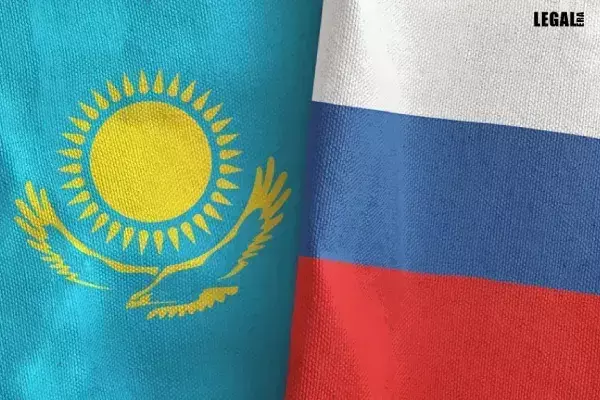
Key Differences in Patent Laws of Russia and Kazakhstan
The ideal policy for applicants is to have a combined approach to patenting, which offers balanced results
The patent frameworks of the Russian Federation and the Republic of Kazakhstan share a common legal heritage and are broadly aligned through their participation in international agreements such as the Paris Convention, the Patent Cooperation Treaty (PCT), and the Eurasian Patent Convention.
However, despite this formal alignment, notable differences and peculiarities emerge in how patent laws are interpreted and applied in practice, particularly in the practice of patent examination and law enforcement.
In Russia, patent regulations are governed by Part IV of the Civil Code of the Russian Federation, with examination and registration handled by Rospatent.
On the other hand, in Kazakhstan, the primary legislation is the Law on Patents, administered by the National Institute of Intellectual Property.
While both systems recognize similar categories of protection, namely technology, in both nations, the objects of patent protection are inventions, utility models, and industrial designs. The differences become apparent in examination standards and enforcement practices, as the utility models in the Russian Federation and Kazakhstan are limited to devices.
However, one key distinction lies in the rigor of patent examination.
Russian authorities tend to apply a more stringent assessment, particularly in evaluating inventive step and non-obviousness. For instance, applications involving mechanical or structural innovations are often closely scrutinized, with examiners frequently interpreting claimed features as ‘ordinary engineering optimization’. This can result in narrowed claims or outright refusals.
By contrast, Kazakhstan generally adopts a more flexible approach, where well-drafted applications that clearly articulate a technical outcome are less likely to face significant modification during examination. Therefore, Kazakhstan is often seen as a more predictable and expedient jurisdiction, while Russian patents are viewed as offering stronger, or rather more reliable protection.
Similarly, while both countries require substantive examination for inventions, their interpretation of the ‘unity of invention’ requirements differs.
Russia enforces this principle more strictly, demanding a clear technical link between claims, whereas Kazakhstan applies a comparatively relaxed standard. It means it is not sufficient to just refer to one independent claim. Also, the level of formalism and the approach to assessing the inventive step differ significantly.
The divergence is particularly evident in pharmaceutical patenting. When patenting pharmaceutical inventions (chemical compound, composition and medical application), the Russian examination requires:
- Confirmation of an unexpected technical result effect.
- Robust experimental data
- A well-defined cause-and-effect relationship between the features of the formula and the declared technical result and its claimed benefits.
Meanwhile, applications involving secondary or new uses of known substances or derivative compounds often face rejection.
In Kazakhstan, the evidentiary threshold in pharmaceuticals is generally lower. It allows broader claims and fewer experimental examples and the technical result can be formulated more broadly. This makes Kazakhstan an attractive option for early-stage filings for pharmaceutical developments, while the Russian Federation demands a more comprehensive evidentiary foundation of the declared pharmacological properties.
As regards computer-implemented inventions and IT solutions, officially, in both countries, computer programs are not subject to patent protection. However, patents may be granted if the invention demonstrates a technical solution achieved through technical means.
In the Russian Federation, the examination is extremely strict, with a strong emphasis on measurable technical effects and explicit linkage to hardware. Data processing algorithms or business logic should be explicitly tied to the hardware implementation and demonstrate a measurable positive effect. This includes, the acceleration of processes, reduction of load, saving resources, and strengthening of security.
Whereas Kazakhstan tends to be more accommodating and the examination more often accepts the applicant’s arguments, particularly in areas of technical nature of the solution, such as control systems, Internet of Things (IoT) technologies, and integrated software-hardware solutions.
Regarding IT developments, Kazakhstan is a more appreciative jurisdiction for obtaining a patent with a relatively broad formula. In the Russian Federation, a deep technical study of the application is required. with detailed flowcharts and the relationship between the hardware and the algorithm.
Likewise, considering compulsory licensing and the use of patents, in the Russian Federation, the institution of compulsory licensing has been developed and actively used. This is especially so in the pharmaceutical sector and in matters related to public interests.
According to the Association of International Pharmaceutical Manufacturers, as of November 2025, about 48 patent disputes between pharmaceutical companies were considered in Russian courts, excluding the courts of the constituent entities of Russia. Out of these, 21 lawsuits were related to the requirement to issue compulsory licenses.
In Kazakhstan, similar norms exist, but the practical application is of a single nature.
For pharmaceutical companies, a patent of the Russian Federation is associated with a higher regulatory risk. However, at the same time, it offers effective mechanisms for protection and judicial suppression of violations of norms.
In Russia, a developed system of administrative and judicial challenges to patents has developed. It is referred to as the Chamber for Patent Disputes of Rospatent, the Court for Intellectual Property Rights. In Kazakhstan, challenges are mainly carried out in court. The practice is less extensive and less formalized.
While a patent of the Russian Federation provides stronger protection in disputes, it also often becomes an object of attack. In Kazakhstan, the risk of annulment is lower, but judicial protection is less ‘worked out’.
Therefore, despite the formal similarity of the patent systems of the Russian Federation and Kazakhstan, their practical application differs significantly.
While Kazakhstan is generally pliant towards a more flexible and ‘applicant-friendly’ model, the Russian Federation offers a strict but stable system of patent protection with developed law enforcement.
Thus, the ideal policy for applicants is a combined approach to patenting. This means using Kazakhstan for the initial fixation of a technical solution and the establishment of a priority date. And the Russian Federation for obtaining a patent, pursuing stronger enforceable rights. This can offer a balanced approach.



