


Bombay High Court Upholds Injunction Against ELGIMET, Citing Risk of Confusion With GLIMET
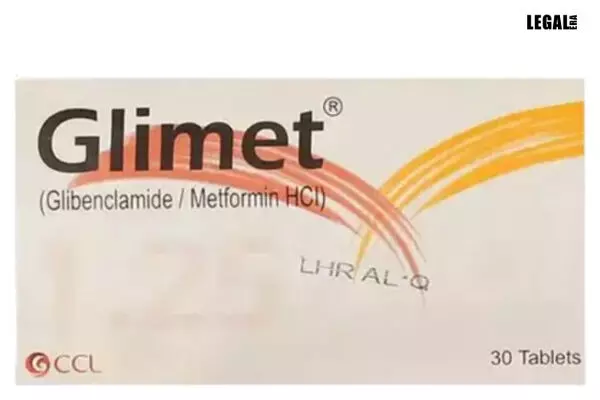
Bombay High Court Upholds Injunction Against ELGIMET, Citing Risk of Confusion With GLIMET
Introduction
The Bombay High Court has confirmed an interim injunction restraining the manufacture and sale of the diabetes medication marketed under the mark “ELGIMET”, holding that it is deceptively similar to the registered pharmaceutical trademark “GLIMET”. The Court emphasised the heightened standard of scrutiny applicable in cases involving medicinal products, where even a slight likelihood of confusion can have serious consequences.
The order was passed by Justice Sharmila U. Deshmukh on November 19, 2025, in a trademark infringement action instituted by Laboratories Griffon Pvt. Ltd., a long-standing pharmaceutical company.
Factual Background
Laboratories Griffon Pvt. Ltd. stated that it has been manufacturing and marketing anti-diabetic drugs under the marks GLIMET and GLIMET DS since the early 1990s. The marks are registered and have been continuously used for decades, thereby acquiring distinctiveness and goodwill in the pharmaceutical market.
In June 2024, Griffon discovered that a competing drug under the mark ELGIMET, manufactured by Adwin Pharma, was being sold through online platforms. Contending that ELGIMET was deceptively similar to its registered marks, Griffon approached the Bombay High Court seeking injunctive relief. An ad-interim injunction restraining the defendants was granted in September 2024.
Procedural Background
Following the grant of ad-interim relief, the matter was heard for confirmation of the injunction. Adwin Pharma contested the injunction and sought its vacation, while Griffon pressed for its continuation, asserting ongoing infringement of its trademark rights.
Issues
1. Whether the mark ELGIMET is deceptively similar to the registered mark GLIMET.
2. Whether the defendants’ use of ELGIMET amounts to trademark infringement under the Trade Marks Act.
3. Whether interim protection ought to be continued considering the nature of pharmaceutical products.
Contentions of the Parties
The plaintiff contended that GLIMET is a coined and distinctive mark that has been in uninterrupted use since 1992. It was argued that ELGIMET is phonetically, structurally, and visually similar, and that confusion is inevitable, particularly in the context of medicinal products where prescriptions are often orally communicated. The plaintiff further relied on the fact that its trademark was registered under Part A of the earlier Trade and Merchandise Marks Act, 1958, demonstrating inherent distinctiveness.
The defendants argued that ELGIMET was neither visually nor phonetically similar to GLIMET and that the price difference between the drugs ruled out confusion. They submitted that GLIMET was derived from the names of pharmaceutical ingredients and could not be monopolised. It was further contended that ELGIMET was honestly adopted, being linked to the defendants’ corporate name “Elcliff”.
Reasoning and Analysis
The Court rejected the defendants’ arguments, reiterating the settled principle that in cases involving pharmaceutical products, courts must adopt a stricter approach due to the potential risks to public health. Relying on the Supreme Court’s decision in Cadila Healthcare Ltd. v. Cadila Pharmaceuticals Ltd., the Court observed that prescription-based sales do not eliminate the possibility of confusion.
Justice Deshmukh held that GLIMET and ELGIMET are phonetically and structurally similar and that an average consumer with imperfect recollection could easily confuse the two. The Court observed that even a minimal likelihood of confusion is sufficient to justify injunctive relief in cases involving medicines.
The Court also rejected the argument that GLIMET is descriptive. While acknowledging that exclusivity cannot be claimed over individual pharmaceutical ingredients, it held that the composite and coined mark “GLIMET” is entitled to protection. The long-standing registration and use of the mark further strengthened the plaintiff’s claim.
On the issue of honest adoption, the Court found that the defendants had produced no material showing prior use, substantial sales, or significant investment in the ELGIMET mark. Given the plaintiff’s presence in the pharmaceutical market since 1992, the Court held that the defendants ought to have been aware of the plaintiff’s registered trademark and avoided adopting a deceptively similar mark.
However, on the claim of passing off, the Court held that although the plaintiff had established goodwill and reputation, no prima facie case of misrepresentation had been made out at this stage, and therefore interim relief on passing off was declined.
Decision
The Bombay High Court confirmed the ad-interim injunction restraining Adwin Pharma and its associates from manufacturing, selling, advertising, or dealing in pharmaceutical products under the mark ELGIMET or any other mark identical or deceptively similar to GLIMET or GLIMET DS. The injunction was continued pending final adjudication of the suit.
In this case the plaintiff was represented by Mr. Rashmin Khandekar, Ms. Archita Gharat, Mr. Kiran Mehta i/b Mr. Kiran J. Mehta, Advocates.



