


Delhi High Court Hears Founding Member’s Copyright And Royalty Dispute Within Indie Band ‘The Local Train
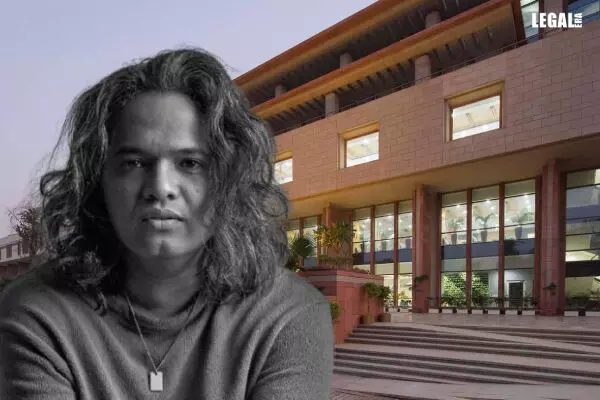
Delhi High Court Hears Founding Member’s Copyright And Royalty Dispute Within Indie Band ‘The Local Train
Introduction
The Delhi High Court is seized of a commercial dispute filed by musician Raman Negi, founding member and former frontman of the indie band The Local Train, alleging unauthorised exploitation of his copyrighted works, denial of royalties and unlawful appropriation of trademarks connected with the band. Negi has approached the Court seeking protection of his statutory rights as an author, composer and performer under the Copyright Act, 1957.
Factual Background
According to the plaint, Negi conceived, authored and composed several original works even before the formal formation of The Local Train and remained the principal creative force during his association with the band. He claims sole authorship of the lyrics of fifteen songs released in the albums Aalas Ka Pedh (2015) and Vaaqif (2018), and sole composition rights over five popular tracks including Choo Lo, Aaoge Tum Kabhi and Kaisey Jiyun.
The suit further states that certain musical compositions were jointly authored by Negi and other band members, with Negi asserting an undivided share in such works. His creative contributions, the plaint claims, were consistently acknowledged through internal communications, documents and public representations.
Procedural Background
Negi asserts that he communicated his decision to exit the band in December 2021, subject to settlement of accounts and completion of exit formalities. However, despite repeated follow-ups, these formalities allegedly remained incomplete. In March 2025, Negi initiated pre-litigation mediation before the Delhi High Court Mediation and Conciliation Centre. The mediation proceedings were closed as “not settled” in September 2025, following which the present commercial suit was instituted.
The matter was heard briefly by Justice Tejas Karia and is listed for further hearing in March 2026.
Issues
1. Whether Raman Negi continues to hold copyright, performer’s rights and moral rights in the musical works associated with The Local Train.
2. Whether the defendants unlawfully exploited Negi’s works and withheld royalties without disclosure or consent.
3. Whether trademark applications filed by the defendants amount to misappropriation of goodwill allegedly generated through Negi’s creative contributions.
Contentions of the Parties
Negi contends that he never executed any written assignment or waiver of his copyright, performer’s rights or moral rights in favour of the defendants, as mandated under the Copyright Act. He alleges that despite his exit being communicated, the defendants continued commercial exploitation of his works across digital platforms, failed to reconcile royalties, withheld financial disclosures and diverted revenues without transparency.
He further alleges that in August 2022, while his exit remained unresolved, one of the defendants filed trademark applications in their exclusive names without his knowledge or consent, seeking to appropriate the band’s goodwill. After rejecting a proposed retirement deed that allegedly stripped him of present and future royalties, Negi issued a legal notice in December 2024 demanding detailed revenue disclosures, which were allegedly ignored.
The defendants, on the other hand, dispute Negi’s claims and contest his entitlement to exclusive or continuing rights, asserting their own interests in the works and associated trademarks.
Reasoning and Analysis
At this stage, the Court has not entered into a merits-based adjudication of the rival claims. However, the pleadings indicate a complex dispute involving overlapping claims of authorship, joint ownership, royalty entitlements and trademark rights. The controversy also raises questions regarding statutory requirements for assignment and waiver under copyright law, as well as fiduciary obligations between band members in commercially exploiting creative works.
Decision
The suit has been entertained and is pending adjudication before the Delhi High Court. The Court has listed the matter for further hearing in March 2026, when the parties’ substantive rights and interim reliefs, if any, are expected to be considered.
In this case the plaintiff is represented by Mr. Nishchal Anand, Ms. Tanvi Jain, Mr. Vaibhav Jairath, Mr. Ajay Thakur and Mr. Sanchit Suri, Advocates of Panda Law. Meanwhile the defendant is represented by Ms. Swathi Sukumar, Senior Advocate with Mr. Aditya Gupta, Ms. Geetanjali Visvanathan, Mr. Siddharth Varshney, Mr. Shuvam Bhattacharya and Ms. Harshitha Rathod from Ira Law.