


Delhi High Court Records Interim Deal in Novo Nordisk–Torrent Semaglutide Patent Dispute, No Immediate Injunction
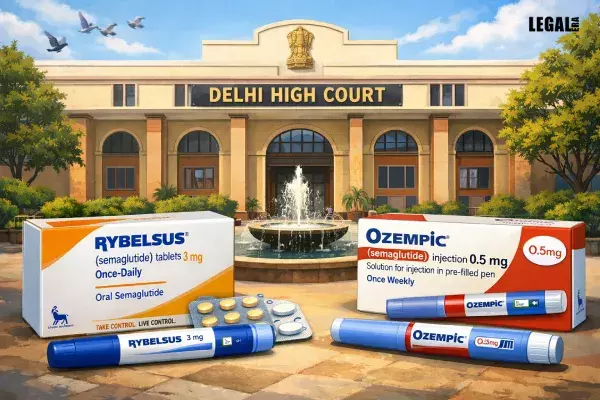
Delhi High Court Records Interim Deal in Novo Nordisk–Torrent Semaglutide Patent Dispute, No Immediate Injunction
Introduction
The Delhi High Court recorded an interim arrangement between Novo Nordisk and Torrent Pharmaceuticals in a patent infringement dispute concerning semaglutide, clarifying that the arrangement would operate without prejudice to the rights and contentions of the parties.
Factual Background
Novo Nordisk, a Danish pharmaceutical company, claimed rights over Indian Patent No. IN 325669, which covers a specific concentration range (0.6 to 2.1 mmol) of the compound SNAC used in semaglutide formulations, a drug widely used for diabetes and weight management. The company alleged that Torrent Pharmaceuticals was manufacturing a competing product infringing its patent. Torrent, however, contended that its product contained SNAC at 0.53 mmol, falling outside the patented range, and therefore did not infringe the patent.
Procedural Background
Novo Nordisk approached the Delhi High Court seeking an ex-parte ad-interim injunction restraining Torrent Pharmaceuticals from manufacturing and selling the allegedly infringing product. During the course of proceedings, both parties arrived at a mutually agreed interim arrangement, which was recorded by Justice Tushar Rao Gedela on March 20, 2026.
Issues
1. Whether Torrent’s semaglutide product infringes Novo Nordisk’s patent IN 325669.
2. Whether interim protection should be granted pending adjudication of the patent dispute.
Contentions of Parties
Novo Nordisk contended that its patent specifically covers a defined range of SNAC concentration and that any product falling within this range would amount to infringement. It sought interim injunctive relief to prevent unauthorized use of its patented technology. Torrent Pharmaceuticals, on the other hand, submitted that its product does not fall within the claimed range and therefore does not infringe the patent. It also undertook to maintain sales records and comply with conditions to demonstrate non-infringement.
Reasoning and Analysis
The Court did not adjudicate on the merits of infringement at this stage but took note of the consensus between the parties to adopt an interim arrangement. It recorded that Torrent had agreed to ensure that the SNAC concentration in its products would remain at 0.53 mmol, thereby staying outside the patented range. The Court also recorded assurances that the defendant would not manufacture any product falling within the patented range for both domestic and export purposes and would provide product samples to the plaintiff. The arrangement was accepted as a practical interim safeguard to balance competing interests while preserving the rights of both parties for final adjudication.
Decision
The Delhi High Court recorded the interim arrangement between the parties and directed Torrent Pharmaceuticals to adhere to the agreed SNAC concentration limits, maintain accounts, and file an affidavit confirming compliance. The matter was listed for further hearing on April 24, 2026.
In this case the plaintiff was represented by Senior Advocates Abhishekh Manu Singhvi and Mr. Amit Sibal; Advocates Hemant Singh, Mamta Jha, Rishabh Paliwal, Shreyansh Gupta, Sanchit Sharma, Saksham Dhingra, Smriti Nair, Ankit Handa, and Amit Bhandari.