


Delhi High Court Restrains Use Of ‘MOTHER CARE’ For Baby Products, Finds It Identical To Registered ‘MOTHERCARE’ Mark
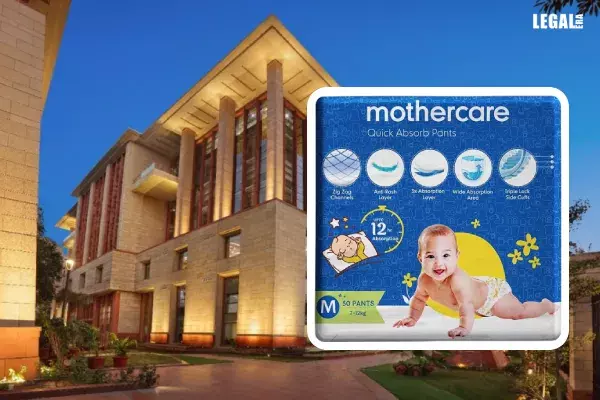
Delhi High Court Restrains Use Of ‘MOTHER CARE’ For Baby Products, Finds It Identical To Registered ‘MOTHERCARE’ Mark
Introduction
The Delhi High Court, through Justice Tushar Rao Gedela, granted an ex parte ad interim injunction in favour of JVCO 2024 Limited, restraining the defendants from using the mark “MOTHER CARE” in relation to baby products. The Court held that the impugned mark is visually, structurally, and phonetically identical to the plaintiff’s registered trademark “MOTHERCARE”, and that its dishonest adoption was likely to deceive consumers and cause unlawful diversion of trade.
Factual Background
JVCO 2024 Limited, proprietor of the globally recognised MOTHERCARE brand in India, instituted proceedings against Syed Jalaluddin, operating through A.M. Agencies and Hamza Kids Wear, along with associated entity Asma Textiles. The grievance arose from the defendants’ manufacture, supply, and sale of baby care products, including diapers, wipes, and under-pads, under the mark “MOTHER CARE.”
The plaintiff traced the origin of the MOTHERCARE brand to its first adoption in 1961 in the United Kingdom by Mothercare Global Brands Limited. Indian rights in the mark were subsequently assigned to JVCO 2024 Limited by way of an Assignment Deed dated 15 October 2024. The plaintiff relied on longstanding global use, Indian registrations, and substantial promotional activities to establish reputation and goodwill.
The Court also noted that the defendants had earlier attempted to register the mark “MotherCare,” but the application stood abandoned in January 2024 after opposition by the plaintiff. Despite this, the defendants resumed use of the mark in February 2026 through another trading identity.
Procedural Background
The plaintiff filed a commercial suit seeking injunction on grounds of trademark infringement and passing off, coupled with an application for urgent ex parte interim relief. The Court examined the plaintiff’s registrations, documentary proof of reputation, prior opposition proceedings, and samples of the defendants’ infringing use on packaging and online listings. At the interim stage, the Court was called upon to determine whether immediate injunctive relief was necessary to prevent continuing deception in the baby products market.
Issues
1. Whether the defendants’ use of “MOTHER CARE” amounted to trademark infringement of the plaintiff’s registered MOTHERCARE mark.
2. Whether the rival mark was deceptively similar so as to create confusion among average consumers.
3. Whether the plaintiff had established grounds for ex parte ad interim injunction.
Contentions of Parties
The plaintiff contended that MOTHERCARE is a globally reputed and long-established trademark enjoying extensive goodwill in India and internationally. It was argued that the defendants had dishonestly adopted an identical mark for identical goods, namely baby care products, despite prior opposition and abandonment of their trademark application.
The plaintiff further submitted that given the identity of goods, consumer class, and trade channels, the likelihood of confusion was inevitable. It was also emphasised that the defendants’ repeated attempts to use the mark, even after abandonment of their registration bid, demonstrated bad faith and dishonest intent.
The defendants had not entered appearance at the ex parte stage.
Reasoning and Analysis
The Court undertook a direct comparison of the rival marks and found that “MOTHER CARE” was, for all practical purposes, identical to “MOTHERCARE.” Justice Gedela observed that the separation of the words into two parts did not diminish the deceptive similarity in any manner. The visual presentation, phonetic identity, and structural composition of the marks were found to be substantially indistinguishable.
The Bench further noted that the defendants were dealing in the very same category of goods as the plaintiff baby care and hygiene products thereby significantly increasing the risk of confusion among consumers of average intelligence and imperfect recollection.
Particular weight was given to the defendants’ earlier failed attempt to register the mark and their subsequent clandestine resumption of use under another trading name. The Court considered this conduct indicative of dishonest adoption and a deliberate attempt to ride upon the plaintiff’s goodwill.
The Court concluded that every sale of the infringing goods would not only result in financial loss to the plaintiff but would simultaneously confer unlawful gain upon the defendants, thereby justifying urgent interim protection.
Decision
The Delhi High Court restrained the defendants, their agents, distributors, and all persons acting on their behalf from manufacturing, selling, advertising, or dealing in any baby products bearing the mark “MOTHER CARE” or any other deceptively similar variant. The defendants were also directed to remove infringing listings from third-party e-commerce platforms and social media channels. The matter is listed before the court on 30th September, 2026.
In this case the plaintiff was represented by Advocates Mamta Jha, Anubhav Chhabra, Sejal Tayal, Rita and Ritu Khandelwal.