


Delhi High Court Temporarily Injuncts Realty Firm From Using ‘EDITION’ Mark, Finds It Completely Identical to Marriott’s ‘THE EDITION’
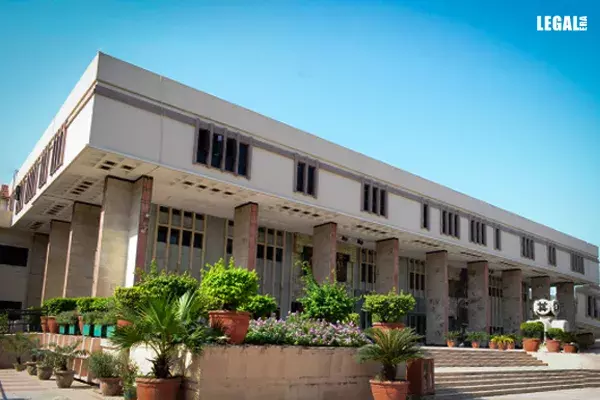
Delhi High Court Temporarily Injuncts Realty Firm From Using ‘EDITION’ Mark, Finds It Completely Identical to Marriott’s ‘THE EDITION’
Introduction
The Delhi High Court granted an ex-parte ad interim injunction in favour of Marriott International Inc., restraining Savya Realty LLP and its partners from using the mark “EDITION” for real estate projects. The Court held that the impugned mark was completely identical to Marriott’s registered trademark “THE EDITION” except for omission of the word “THE,” and was likely to mislead consumers into believing an association with the hospitality giant.
Factual Background
Marriott International Inc. launched its EDITION brand in 2008 and holds multiple trademark registrations in India across different classes. The dispute arose when the company discovered that Savya Realty LLP was marketing a residential real estate project under the name “THE EDITION” through its website and third-party online platforms.
Marriott contended that the defendants had adopted its registered mark in its entirety and that such use was likely to create a false impression of association, collaboration, endorsement, or authorization by Marriott.
Procedural Background
Upon discovering the impugned use, Marriott International Inc. instituted a trademark infringement suit before the Delhi High Court seeking urgent interim protection against use of the mark “EDITION” by the defendants.
Issues
1. Whether the defendants’ use of “EDITION” amounted to trademark infringement of Marriott’s registered “THE EDITION” mark.
2. Whether the rival marks were deceptively similar visually, phonetically, structurally, and conceptually.
3. Whether Marriott had established a prima facie case warranting immediate interim injunction.
Contentions of the Parties
The plaintiff argued that the defendants had reproduced its registered trademark in a nearly identical form, with even the font style appearing substantially the same. It was submitted that such use for realty projects would mislead consumers into believing an association with Marriott’s luxury hotel and branded residence business.
The plaintiff further sought protection not only against direct use of the mark but also against its use across digital channels, including websites, social media, domains, and online advertising infrastructure.
Reasoning and Analysis
The Court observed that except for omission of the word “THE,” the impugned mark was completely identical to Marriott’s registered trademark. It further noted that the font and presentation were also strikingly similar, such that on first glance the defendants’ branding appeared to be that of the plaintiff.
The Bench of Justice Tushar Rao Gedela held that such use was likely to deceive an unwary consumer into believing that the defendants’ project was associated with, licensed by, or endorsed by Marriott. This likelihood of confusion extended across visual, phonetic, structural, and conceptual comparison.
The Court found that Marriott had placed overwhelming documentary evidence on record showing prior registration, reputation, and unauthorized use by the defendants. Consequently, the balance of convenience strongly favoured the plaintiff, and denial of immediate protection would cause irreparable injury not compensable in monetary terms alone.
Decision
The Delhi High Court restrained Savya Realty LLP, its partners, and all persons acting on their behalf from using the mark “EDITION” or any deceptively similar variant in relation to real estate projects, including across websites, domains, social media, metatags, metadata, email addresses, and online advertisements.
The defendants were also directed to maintain accounts of all revenues, bookings, enquiries, and commercial transactions generated through use of the impugned mark pending further proceedings.
In this case the plaintiff was represented by Advocates Pravin Anand, Vaishali Mittal, Gitanjali Sharma, and Shivang Sharma.