


Gujarat High Court Sets Aside Rs.98 Lakh GST SCN, Says No Construction Activity To Trigger Blocked ITC Provision
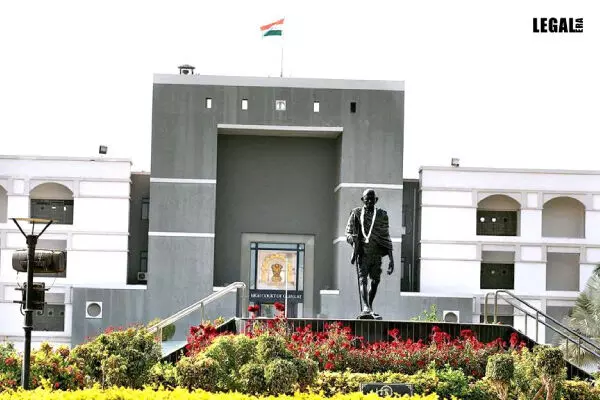
Gujarat High Court Sets Aside Rs.98 Lakh GST SCN, Says No Construction Activity To Trigger Blocked ITC Provision
Introduction
The Gujarat High Court has quashed a show cause notice (SCN) issued under Section 74(1) of the Central Goods and Services Tax Act, 2017, holding that the bar on input tax credit (ITC) under Section 17(5)(d) does not apply where the taxpayer merely transfers leasehold rights without undertaking any construction activity. A Division Bench comprising Justice A.S. Supehia and Justice Pranav Trivedi directed the department to unblock ₹98,11,678 lying in the electronic credit ledger of the petitioner, a Non-Resident Indian engaged in transfer of leasehold rights.
Factual Background
Section 17(5)(d) of the CGST Act denies ITC on goods or services received for construction of immovable property on one’s own account, even if used in the course of business. The dispute before the Court was whether transfer of leasehold rights in an industrial plot could attract this restriction.
The petitioner, an NRI residing in the United States, had acquired leasehold rights in an industrial plot from the Gujarat Industrial Development Corporation (GIDC). His activity was limited to sub-plotting and transferring leasehold rights to purchasers. He obtained GST registration in March 2022 solely for the purpose of discharging GST on such transfers.
During the financial year 2022–23, the petitioner sold two subplots and paid output GST of ₹3.60 crore in July 2022 and ₹2.97 crore in September 2022. He availed ITC of ₹98,11,678 on GST charged by GIDC on various charges including subdivision fees and transfer charges. The department alleged that this credit was barred under Section 17(5)(d) and issued a notice under Section 74(1), alleging wrongful availment of credit by reason of fraud, wilful misstatement or suppression of facts. The credit was simultaneously blocked in the electronic ledger.
The record showed that ₹38,60,608 was inadvertently utilised in July 2022 but was subsequently reversed through Form DRC-03 dated April 11, 2023. The entire output tax liability had been discharged in cash.
Procedural Background
The petitioner challenged the show cause notice and blocking of ITC before the Gujarat High Court, contending that he had undertaken no construction activity and that invocation of Section 74(1) was legally unsustainable.
Issues
1. Whether Section 17(5)(d) of the CGST Act applies to transfer of leasehold rights absent any construction activity.
2. Whether the conditions for invoking Section 74(1), involving fraud or suppression, were satisfied.
3. Whether the blocking of ITC in the electronic credit ledger was justified.
Contentions
The petitioner argued that Section 17(5)(d) applies exclusively to construction-related expenditure and cannot be invoked in the absence of any construction activity. He submitted that his business was limited to transfer of leasehold rights and that no immovable property was constructed by him. It was further contended that there was no fraud, wilful misstatement or suppression of facts warranting proceedings under Section 74(1). The department maintained that the ITC was blocked credit under Section 17(5)(d) and therefore wrongly availed.
Reasoning and Analysis
The High Court observed that the legislative intent behind Section 17(5)(d) was to block credit only in respect of construction-related expenditure. It found no material on record to establish that the petitioner had undertaken any construction activity whatsoever. The Bench held that merely transferring leasehold rights in a GIDC plot does not attract the statutory bar.
The Court further held that invocation of Section 74(1) was unsustainable, as there was no evidence of fraud, wilful misstatement or suppression of facts. It recorded that the entire output tax liability had been discharged and that the petitioner had even reversed the portion of credit inadvertently utilised.
Holding that there was a clear non-application of mind on the part of the department, the Court concluded that the statutory preconditions for issuance of notice under Section 74(1) were absent.
Decision
The Gujarat High Court quashed the show cause notice issued under Section 74(1) and directed the authorities to unblock the ITC of ₹98,11,678 within three weeks. It held that Section 17(5)(d) did not apply to the petitioner’s transfer of leasehold rights and that the proceedings were initiated without satisfying the statutory requirements.