


Karnataka High Court Upholds Injunction Against ‘TULSI’ Agarbatti Mark, Rejects Descriptive Use Defence Against ‘TULASI’
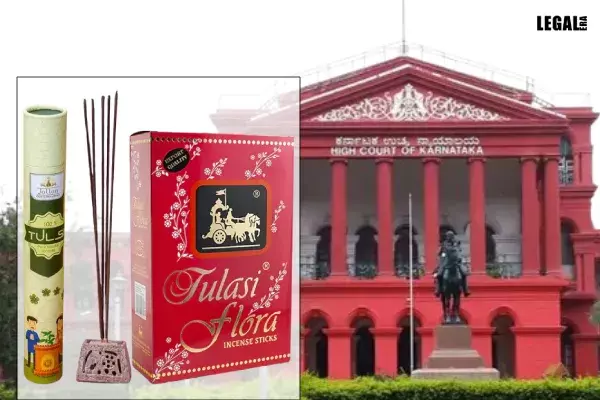
Karnataka High Court Upholds Injunction Against ‘TULSI’ Agarbatti Mark, Rejects Descriptive Use Defence Against ‘TULASI’
Introduction
The Karnataka High Court upheld an interim injunction restraining use of the mark “TULSI” for agarbattis, holding that it is prima facie deceptively similar to the long-standing registered trademark “TULASI” of Sarathi International Inc. The Court rejected the defence that the term was merely descriptive of basil fragrance and found that its use was trademark-like in nature.
Factual Background
Sarathi International Inc. claimed continuous and exclusive use of the trademark “TULASI” for agarbattis since 1950. It asserted that the mark had acquired a strong secondary meaning and distinctiveness over seven decades, becoming synonymous with its products in the market.
The dispute arose when Jallan Enterprises entered the market in 2023 with agarbatti products branded as “TULSI.” The respondent alleged that the adoption was dishonest and intended to capitalize on the goodwill associated with the “TULASI” brand. A cease-and-desist notice was issued, but upon non-compliance, a suit for permanent injunction and recovery of profits was filed.
Procedural Background
The trial court, namely the Additional City Civil and Sessions Judge, Bengaluru, granted an injunction in April 2025 restraining use of the “TULSI” mark pending disposal of the suit. Aggrieved, Jallan Enterprises preferred an appeal before the High Court challenging the interim order.
Issues
1. Whether the mark “TULSI” is prima facie deceptively similar to the registered mark “TULASI.”
2. Whether the defendant’s use of “TULSI” qualifies as bona fide descriptive use under Sections 30 and 35 of the Trade Marks Act, 1999.
3. Whether the trial court’s exercise of discretion in granting injunction warranted appellate interference.
Contentions of the Parties
The appellant argued that the word “TULSI” was used only to describe the basil fragrance of the agarbattis and was therefore protected as descriptive use under Sections 30 and 35 of the Trade Marks Act. It contended that the use was comparable to fragrance descriptors such as camphor or lavender.
The respondent, on the other hand, argued that the mark “TULASI” had been in continuous use since 1950 and had acquired strong source-identifying significance. It was contended that the appellant’s adoption of the nearly identical phonetic variant “TULSI” in a prominent font was a dishonest attempt to ride on the respondent’s goodwill.
Reasoning and Analysis
The High Court noted that the only difference between the rival marks was omission of the letter “a,” making them phonetically almost identical. It held that such similarity was sufficient to create confusion among consumers with imperfect recollection.
The Court found the descriptive use defence prima facie unsustainable because the word “TULSI” was not used in a merely descriptive manner. Instead, it was prominently displayed in a larger font than the appellant’s own house mark “JALLAN,” thereby functioning as a trademark rather than an ingredient descriptor.
The Bench also observed that while the packaging contained images of tulsi leaves and pots, competitors were not dependent on the exclusive use of the term “TULSI” to describe fragrance. The use adopted by the appellant was therefore not bona fide.
On appellate review, the Court reiterated that interference with an interim injunction is warranted only when the trial court’s discretion is arbitrary or perverse. Since the trial court had exercised discretion on a reasonable appreciation of the material, no interference was justified.
Decision
The High Court dismissed the appeals and upheld the interim injunction restraining Jallan Enterprises from using the mark “TULSI” for agarbattis.
In this case the plaintiff was represented by Advocate Sivaramakrishnan M. Sivsankaran. Meanwhile the respondent was represented by Advocate Priya V.



