


Kerala High Court Dismisses Writ Petition Against ED’s Attachment Order, Emphasises Exhaustion of PMLA Remedies
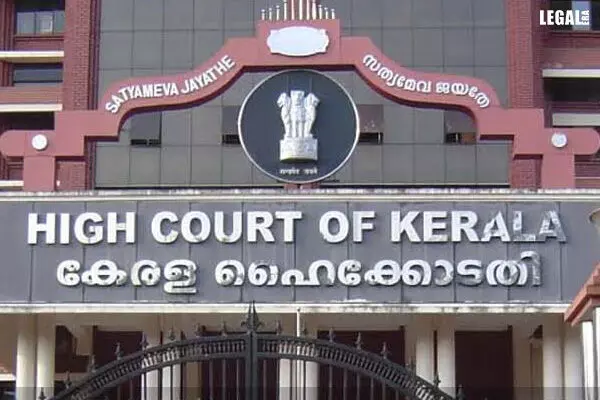
Kerala High Court Dismisses Writ Petition Against ED’s Attachment Order, Emphasises Exhaustion of PMLA Remedies
Introduction
The High Court of Kerala has dismissed a writ petition filed to challenge an attachment order passed by the Enforcement Directorate (ED) under Section 5(1) of the Prevention of Money Laundering Act, 2002 (PMLA), holding that such orders must be challenged before the appropriate statutory forum provided under the Act before approaching the High Court.
Factual Background
The ED had provisionally attached properties under Section 5(1) of the PMLA, alleging that they were proceeds of crime. Aggrieved by the attachment, the petitioner directly approached the High Court under Article 226 of the Constitution, seeking to quash the ED’s order.
Key Issue
The central issue was whether the petitioner could maintain a writ petition against an attachment order without first exhausting the statutory appellate remedy provided under Section 26 of the PMLA.
Contentions
Petitioner’s Contentions:
- The ED’s order was arbitrary and violated fundamental rights.
- The writ jurisdiction under Article 226 could be invoked in exceptional cases of clear illegality.
ED’s Contentions:
- The PMLA provides a complete mechanism for challenging an attachment order before the Adjudicating Authority and, subsequently, before the Appellate Tribunal under Section 26.
- The petitioner had an effective alternative statutory remedy which had not been exhausted.
Reasoning & Analysis
Justice Gopinath P. agreed with the ED’s position, observing that the PMLA creates a detailed mechanism for adjudication and appeal of provisional attachment orders. The Court noted that a writ petition is not maintainable when a party has a statutory right of appeal that remains unexercised, unless there are exceptional circumstances showing violation of natural justice or lack of jurisdiction, which were not established in this case.
The Court further reiterated the settled principle that the High Court’s extraordinary jurisdiction under Article 226 should not be invoked as an alternative to the statutory process.
Outcome
The High Court dismissed the writ petition as not maintainable, directing the petitioner to approach the appropriate statutory forum under the PMLA if so advised.