


No Monopoly Over ‘Vapo’: Madras High Court Rejects P&G’s Bid To Block ‘VAPORIN’ Trademarks
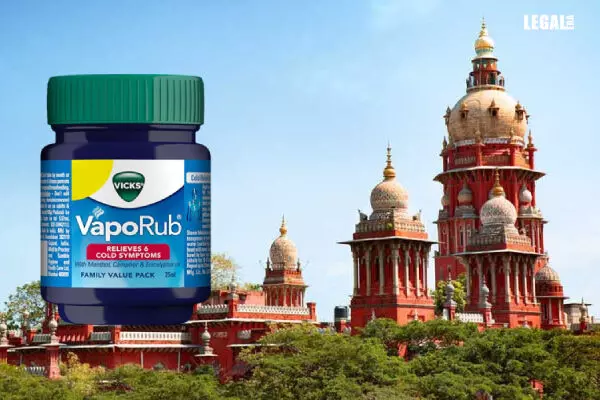
No Monopoly Over ‘Vapo’: Madras High Court Rejects P&G’s Bid To Block ‘VAPORIN’ Trademarks
Introduction
The Madras High Court has held that the term “Vapo” is descriptive, generic and publici juris, and that Procter & Gamble Company (P&G), the proprietor of the well-known “Vicks VapoRub” brand, cannot claim exclusive trademark rights over the use of the word “Vapo.” The Court dismissed three trademark rectification petitions filed by P&G seeking cancellation of registrations granted in favour of IPI India Private Limited for the marks “VAPORIN,” “VAPORIN COLD RUB” and allied device marks. The decision was delivered by Justice N. Senthilkumar by an order dated January 6, 2026.
Factual Background
Procter & Gamble Company is the owner of several trademarks forming part of the “Vicks” brand portfolio, including “VICKS,” “VAPORUB,” and other Vapo-formative marks. According to P&G, “Vicks VapoRub” was introduced internationally in 1890 and in India in 1964, and has since acquired immense goodwill, reputation and statutory recognition through long and extensive use.
IPI India Private Limited is engaged in the manufacture and sale of medicinal and wellness products under the marks “VAPORIN,” “VAPORIN COLD RUB,” and the slogan “Vapor In, Stress Out. Anytime, Anywhere.” These marks were registered under Classes 3 and 5 of the Trade Marks Act, 1999.
P&G alleged that the adoption of these marks by IPI India was dishonest and designed to ride on the goodwill associated with “Vicks VapoRub,” particularly due to the shared use of the expression “Vapo.”
Procedural Background
Aggrieved by the grant of trademark registrations in favour of IPI India, P&G approached the Madras High Court by filing three rectification petitions under Sections 47, 57 and 125 of the Trade Marks Act, 1999. P&G sought removal of the impugned marks from the Register of Trade Marks on the grounds of deceptive similarity, likelihood of confusion, lack of distinctiveness and bad faith adoption.
IPI India resisted the petitions, leading to adjudication by the High Court.
Issues
1. Whether the term “Vapo” is descriptive, generic and publici juris, incapable of exclusive appropriation.
2. Whether the marks “VAPORIN” and “VAPORIN COLD RUB” are deceptively similar to “VICKS VAPORUB.”
3. Whether the registrations in favour of IPI India were liable to be cancelled under the Trade Marks Act, 1999.
Contentions Of The Parties
P&G contended that it enjoyed long-standing statutory and common law rights in “VICKS,” “VAPORUB” and allied Vapo-formative marks. It argued that “Vapo” had acquired distinctiveness through decades of exclusive use by P&G and had become uniquely associated with its products in the minds of consumers. According to P&G, IPI India’s adoption of “VAPORIN” and “VAPORIN COLD RUB,” along with similar product descriptions and trade dress, was calculated to cause confusion and amounted to an attempt to unfairly benefit from the goodwill of Vicks VapoRub.
IPI India, on the other hand, argued that “Vapo” is derived from the word “vapour” and is descriptive of vapour-based medicinal preparations commonly used for relief from cold and congestion. It submitted that the term is widely used in the trade and is incapable of monopolisation. IPI India relied on evidence of extensive third-party use of “Vapo”-prefixed marks and also placed on record its own registrations, advertisements, sales figures and use of the “VAPORIN” marks since 2013. It was contended that when the rival marks are compared as a whole, they are visually, phonetically and structurally distinct.
Reasoning And Analysis
The High Court reiterated the settled principle that trademarks must be compared as a whole, without dissecting individual components, and from the perspective of an average consumer with ordinary intelligence and imperfect recollection.
Applying this test, the Court found that “VICKS VAPORUB” and “VAPORIN” are phonetically and visually dissimilar. It noted that the colour schemes, packaging, layout and overall trade dress of the competing products were distinct and did not create a likelihood of confusion as to source.
A central aspect of the Court’s reasoning concerned the nature of the term “Vapo.” The Court held that “Vapo” is merely an abbreviated form of the word “vapour” and directly describes vapour-based medicinal products. Taking note of extensive third-party use of “Vapo”-prefixed marks in the market, the Court concluded that the term is publici juris and cannot be monopolised by a single trader, regardless of the reputation of its products.
Rejecting P&G’s core submission, the Court observed that the use of “Vapo” in IPI India’s marks did not render them deceptively similar to “VICKS VAPORUB.” It emphasised that trademark law does not permit exclusive appropriation of descriptive or generic terms merely because one trader has achieved commercial success.
Decision
The Madras High Court dismissed all three trademark rectification petitions filed by Procter & Gamble Company. It upheld the registrations granted in favour of IPI India Private Limited for “VAPORIN,” “VAPORIN COLD RUB” and allied marks, holding that the term “Vapo” is generic, descriptive and publici juris, and that the rival marks are distinct with no likelihood of consumer confusion.
In this case the petitioner was represented by Mr.Abishek Jenasenan, Advocate.