


EcoFactor Fails to Overcome Rejection of Reexamined Smart Thermostat Claims at CAFC
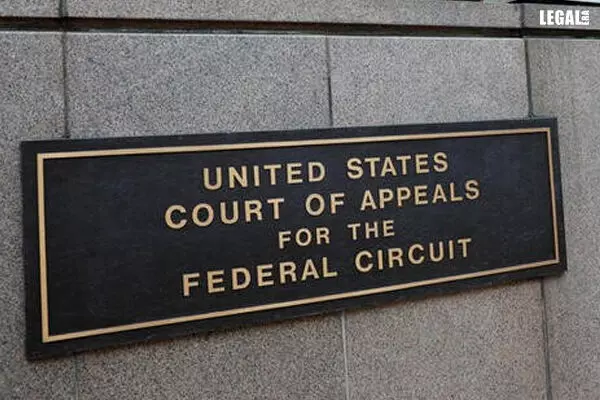
EcoFactor Fails to Overcome Rejection of Reexamined Smart Thermostat Claims at CAFC
The CAFC held that, after comparing the amended text to the original, ‘a system comparing an actual rate of change would not have infringed the original patent, but it would infringe the amended patent.
The U.S. Court of Appeals for the Federal Circuit (CAFC) today affirmed the Patent Trial and Appeal Board’s (PTAB’s) decision sustaining an examiner’s rejection in an ex parte reexamination of claims of EcoFactor, Inc.’s patent relating to smart thermostat technology.
Google filed for reexamination of U.S. Patent No. 8,412,488 in 2021, which was originally granted in 2013, and the reexamination request was granted. An examiner then rejected claims 1, 3 through 9 and 11 through 16 in a non-final office action as unpatentable over the combination of U.S. Patent No. 2004/0117330 (“Ehlers”) and U.S. Patent No. 2005/0159846) (“Van Ostrand”) and claims 2 and 10 as unpatentable over Ehlers, Van Ostrand, and a third patent, No. 6,789,739 (“Rosen”).
EcoFactor amended its two independent claims, 1 and 9, in response to the non-final rejection. Original claim 1 “compare[d] [i] an inside temperature recorded inside the first structure with [ii] said estimation for the rate of change in inside temperature,” whereas amended claim 1 “compare[d] [i] an actual rate of change in inside temperature recorded inside the first structure with [ii] said estimation for the rate of change in inside temperature.” Claim 9 contained similar amendments.
The examiner then rejected all 16 claims in a Final Office Action, explaining that “EcoFactor’s amendments to claims 1 and 9 impermissibly enlarged the scope of the claims.” The Final Office Action also sustained the non-final office action’s rejection of all claims under pre-AIA 35 U.S.C. § 103(a).
EcoFactor appealed to the PTAB and the Board affirmed the examiner’s rejection. On appeal to the CAFC, EcoFactor argued against the conclusion that its amendments enlarged the claims, saying that “an actual rate of change in inside temperature is necessarily calculated using the inside temperature values implicated in the original limitation.” But the CAFC rejected this argument, explaining that the fact that “calculating an actual rate of change entails using actual temperature values…has little bearing on enlargement.”
The CAFC held that, after comparing the amended text to the original, “a system comparing an actual rate of change would not have infringed the original patent, but it would infringe the amended patent.”
As a a result, the amended claim was broader than the original in at least one respect, said the court, and “EcoFactor expanded the scope of its claims during reexamination in violation of 35 U.S.C. § 305.”
EcoFactor was also recently the subject of a widely-watched en banc CAFC decision in which the full but split court held that a district court’s order denying Google’s motion for a new trial on damages following a $20 million damages award for EcoFactor should be reversed.