


Oil companies sued by Michigan for colluding to restrict EV competition
Oil companies sued by Michigan for colluding to restrict EV competition
Nessel, a democrat, filed the lawsuit in the US District Court in western Michigan and named BPL Chevron, Exxon, Shell and the American Petroleum Institute
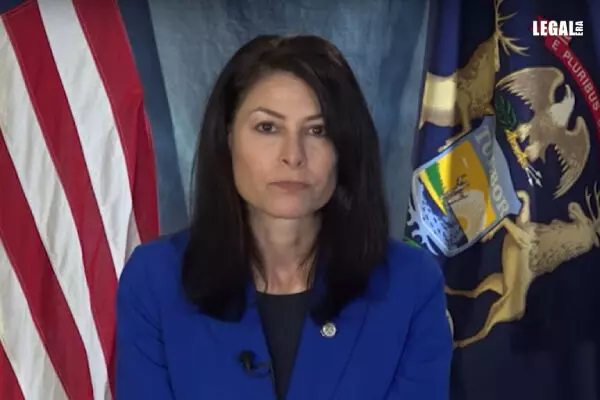
Michigan Attorney General Dana Nessel has filed an antitrust lawsuit against four major oil companies, affirming that they conspired for decades to avert competition from renewable energy including electric vehicles.
Nessel, a democrat, filed the lawsuit in the US District Court in western Michigan and named BPL Chevron, Exxon, Shell and the American Petroleum Institute.
As per the complaint, the companies acted "as a cartel, agreeing to reduce the production and distribution of electricity from renewable sources and to restrain the emergence of electric vehicles and renewable primary energy technologies in the United States.”
A lawyer for Chevron reportedly called Michigan's lawsuit, “baseless as demonstrated by multiple related court dismissals" in other venues, including Delaware, Pennsylvania and New York.
Chevron’s lawyer also reportedly said, “This lawsuit also ignores the fact that Michigan is highly dependent on oil and gas to support the state’s automakers and workers.”
Shell refused to comment. Representatives from American Petroleum Institute, Exxon and BP did not immediately reply to requests for comment.
The lawsuit reportedly said that the companies “abandoned renewable energy projects, used patent litigation to hinder rivals, suppressed information concerning the hidden costs of fossil fuels and viability of alternatives... and used trade associations to coordinate market-wide efforts to divert capital expenditures away from renewable energy—all to further one of the most successful antitrust conspiracies in United States history."
The suit reportedly noted that Exxon in the 1970s developed the first hybrid gas-electric vehicle technologies; in 1978, publicly showed an electric motor integrated into a hybrid gas-electric propulsion system, installed in a Chrysler Cordoba; and in 1979, partnered with Toyota to develop a hybrid gas-electric vehicle using a Toyota Cressida chassis.
"But Exxon never marketed that innovative hybrid engine technology and consistently has deferred meaningful investment in its lithium-ion and graphite-based battery technologies for EVs," the lawsuit reportedly said and added that Exxon’s internal research in 1979, "predicted that renewable energy would increasingly become a competitive threat to fossil fuels".
Chevron took steps to delay a critical EV and battery technology known as nickel-metal hydride rechargeable batteries by acquiring patents to restrict their use in automobiles; the suit reportedly also said.
A series of actions have been taken by the Trump administration to make it easier for automakers to avoid building EVs and make it more expensive for consumers to buy EVs after the Biden administration had adopted rules that would have required automakers to build an increasing number of EVs.



