


Pakistan’s Competition Commission rules in favor of Pepsico in the Sting vs Storm case against Mezan
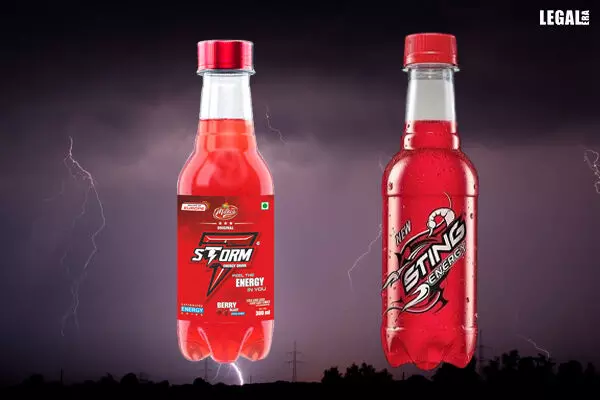
Pakistan’s Competition Commission rules in favor of Pepsico in the Sting vs Storm case against Mezan
Imposes PRs150 million (US$536,400) on the local manufacturer
The Competition Commission of Pakistan (CCP) has given a landmark judgment by favoring PepsiCo in a dispute against local company Mezan Beverages, stating that the latter violated the Competition Act, 2010.
Earlier, PepsiCo accused Mezan of using deceptive marketing practices under Section 10(d) by copying the trade dress of its energy drink Sting for Mezan’s energy drink Storm.
Citing the similarity between the names Sting and Storm, the multinational company held that Mezan deliberately copied its product design to mislead consumers. The label and packaging for Storm constituted a copycat version of Sting’s distinctive label and packaging.
While Sting is a popular energy drink in Asia, both companies have registered trademarks for their beverage brands.
Commenting on the matter, Sana Shaikh Fikree, a counsel at Vellani & Vellani in Karachi, remarked, “CCP has made clear observations concerning its authority to investigate and penalize conduct that misleads consumers, distorts competition, or unfairly exploits the goodwill of established brands.”
When the case began, the question arose whether the matter fell under the jurisdiction of the competition law or the Intellectual Property Tribunal (IPT).
However, while Mezan’s counsel believed the IPT should handle the matter, the CCP asserted its authority over commercial matters to ensure fair competition.
Fikree remarked, “Importantly, the CCP clarified that while it does not decide or provide guidance on the allocation, availability or ownership of trademarks, matters that fall within the domain of the Intellectual Property Organization, it is fully empowered to take prohibitive action against deceptive marketing practices.”
She explained that the CCP interpreted Section 10(d) in line with the common law principles of passing off, viewing the scope of the prohibitive provisions under Section 10(d) as not limited to mere ‘exact replicas.’ Instead, the provisions encompass marks, names, labelling or packaging that were confusingly or deceptively similar.
Fikree added, “Moreover, consistent with the principles laid down by the Supreme Court of Pakistan, the Commission has reaffirmed that the likelihood of consumer confusion must be assessed from the perspective of the ordinary consumer, rather than through a technical or specialized lens.”
She furthered, “The CCP reiterated that parasitic imitation, even if falling short of direct counterfeiting, can still result in consumer confusion and constitutes willful deceit intended to exploit the reputation and goodwill of an established brand.”
The Vellani & Vellani counsel said the decision reinforced the principle that competition law also protects against subtler forms of imitation aside from actual counterfeiting.
“By consistently addressing parasitic copying and misrepresentation, the CCP has sent a strong signal that consumer protection and market integrity remain paramount,” Fikree maintained.
Sending a stern message, the Commission refused to absolve Mezan of liability. It stated that Mezan’s marketing strategy was a common practice in the industry, thereby protecting the end consumer. It held that trademark registration did not absolve an entity from liability under the competition law if parasitic copying or deceptive trade dress was practiced.