


US-China Tensions Drive Foreign Law Firms To Scale Back Operations In China
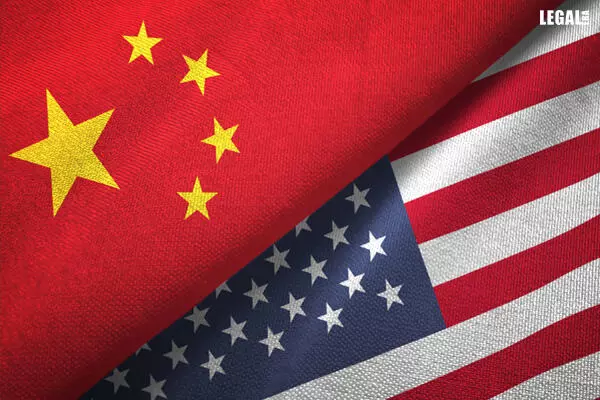
US-China Tensions Drive Foreign Law Firms To Scale Back Operations In China
“Major US law firm closures in China reflect shifting legal and regulatory landscape”
K&L Gates, a prominent U.S.-based law firm founded in Pittsburgh, has announced the closure of its Beijing office, signalling a continued trend of American legal institutions scaling back their physical presence in China. This move follows a comprehensive review of the firm's global operations by its newly appointed leadership team.
According to a spokesperson, the firm will consolidate its Beijing operations into its Shanghai office, a decision influenced in part by considerations surrounding global real estate efficiency and strategic positioning within the Asian market.
Leadership Transition and Strategic Review
The decision comes on the heels of a significant leadership transition at K&L Gates. Stacy Ackermann was appointed as the firm’s global managing partner effective July 1, accompanied by the formation of a new management committee co-chair. Under this leadership, a detailed evaluation of the firm’s international footprint was undertaken, leading to the determination that consolidation within China would better serve long-term business objectives.
Continued Commitment to the Chinese Market
Despite the closure of its Beijing office, K&L Gates maintains a strong presence in the region and remains committed to serving its Chinese and international clients through its offices in Shanghai, Hong Kong, and other Asian markets. The firm initially launched its Beijing operations in 2004 and has since provided a wide range of services in both domestic and cross-border legal matters.
While the firm currently lists 14 lawyers under its Beijing roster, six of them have already transitioned to other cities, indicating a gradual strategic realignment rather than an abrupt closure.
Wider Industry Trend: U.S. Law Firms Reassess China Operations
K&L Gates is the latest in a growing list of major U.S. law firms to either exit or reduce operations in mainland China. Over the past two years, a number of firms including Wilson Sonsini, Cleary Gottlieb, Winston & Strawn, and Seyfarth Shaw have announced similar moves, citing a combination of geopolitical uncertainty, reduced deal-making activity, and heightened regulatory challenges for foreign businesses.
This wave of exits marks a stark contrast to the boom seen a decade ago, when foreign law firms were actively expanding into China. The current shift reflects a more cautious and measured approach by U.S. firms navigating the evolving business and political landscape in the region.
Geopolitical Context: A Complex Bilateral Environment
The legal sector’s recalibration in China occurs against the backdrop of a complex and often tense geopolitical environment. Trade relations between the United States and China have remained strained, with regulatory scrutiny and political friction affecting various sectors, including technology and foreign investment.
Adding to the dynamic, recent diplomatic interactions suggest tentative efforts toward cooperation. U.S. President Donald Trump recently reported progress in negotiations with Chinese President Xi Jinping on the potential U.S. acquisition of TikTok, signalling a willingness to engage on key economic and security issues. A high-level bilateral meeting is expected to take place in South Korea within six weeks, covering topics such as trade, drug control, and Russia’s military actions in Ukraine.
The closure of K&L Gates' Beijing office underscores a broader shift in the legal industry's global strategy and presence in China. While the firm continues to support its clients in the region through its other Asian offices, the consolidation reflects a pragmatic response to evolving market conditions and geopolitical realities. As the legal and business landscape continues to shift, firms like K&L Gates are adapting their strategies to maintain resilience and relevance in an increasingly complex international environment.