


Court Overturns Dismissal of Trader Joe's Trademark Lawsuit Against Union
Court Overturns Dismissal of Trader Joe's Trademark Lawsuit Against Union
Introduction
The U.S. Court of Appeals for the Ninth Circuit has reversed a district court decision in favor of Trader Joe's United (TJU), the union representing some Trader Joe's employees, in a trademark infringement lawsuit. The Ninth Circuit ruling also vacated the district court's award for attorney's fees for TJU and remanded the case for further proceedings.
Factual Background
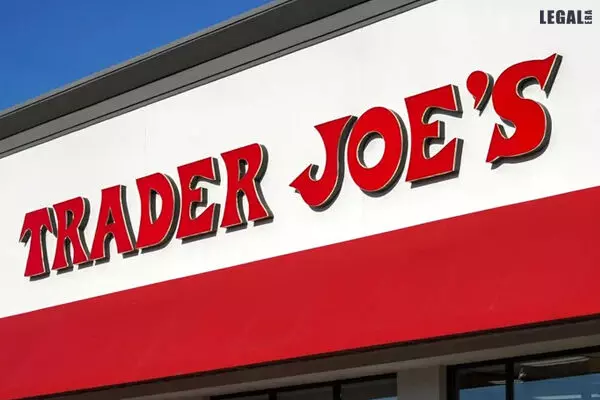
Trader Joe's sued TJU in 2023, alleging trademark infringement due to TJU's use of a logo resembling the Trader Joe's mark on merchandise sold on its website, including mugs, buttons, apparel, and tote bags. TJU argued that the lawsuit was retaliation against its unionization efforts, noting that the complaint was filed six days after the National Labor Relations Board issued a consolidated complaint against Trader Joe's for unlawful labor practices ².
Procedural Background
The district court granted TJU's motion to dismiss the complaint with prejudice, finding that consumers were unlikely to confuse the marks due to TJU's website clearly identifying itself as a labor union and being openly critical of Trader Joe's labor practices. The district court also awarded TJU $112,622.12 in attorneys' fees. However, the Ninth Circuit reversed this decision, applying the likelihood of confusion factors outlined in AMF Inc. v. Sleekcraft Boats ¹.
Issues
- The main issue was whether the district court erred in dismissing Trader Joe's trademark infringement claims.
- The Ninth Circuit examined the likelihood of confusion factors, including the strength of the marks, proximity or relatedness of the goods, similarity of the marks, marketing channels used, and type of goods and degree of care exercised by purchasers.
Contentions of the Parties
Trader Joe's: Trader Joe's argued that TJU's use of its mark on merchandise was likely to cause consumer confusion and dilution of the marks. They contended that the district court erred in dismissing their claims.
TJU: TJU argued that the lawsuit was retaliation against its unionization efforts and that no reasonable consumer would be confused by its products.
Reasoning and Analysis
The Ninth Circuit applied the Sleekcraft factors, finding that:
- Strength of the marks: Weighed strongly in favor of Trader Joe's.
- Proximity or relatedness of the goods: The district court erred in taking too narrow an approach, and this factor should be reconsidered.
- Similarity of the marks: Weighed in favor of Trader Joe's due to the "strikingly similar" marks.
- Marketing channels used: Was neutral.
- Type of goods and degree of care exercised by purchasers: Weighed neither in favor nor against likelihood of confusion.
Implications
The Ninth Circuit's decision implies that the district court was too quick to dismiss Trader Joe's claims. The case has been remanded for further proceedings, allowing Trader Joe's to pursue its trademark infringement claims.
Relief Sought
Trader Joe's sought relief from TJU's alleged trademark infringement. While the district court initially dismissed the claims, the Ninth Circuit reversed this decision, paving the way for further litigation.