


Delhi High Court Upholds ‘BADAL’ Trademark Registration, Dismisses Rectification Petition
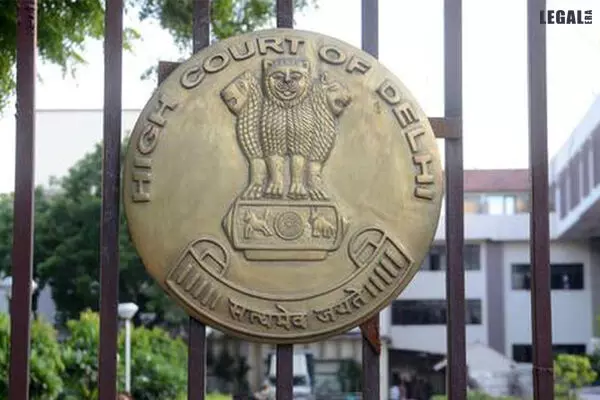
Delhi High Court Upholds ‘BADAL’ Trademark Registration, Dismisses Rectification Petition
Introduction
The Delhi High Court has dismissed a rectification petition filed against the registration of the trademark ‘BADAL’ in favour of Hindustan Technocast (P) Ltd. The petitioner had alleged that the registration was obtained through fraudulent means and an invalid assignment deed. However, the Court held that such allegations required evidence and could not be decided merely on the basis of pleadings.
Factual Background
The trademark ‘BADAL’ was registered in 2000 in Class 07 in favour of Hindustan Technocast (P) Ltd. The petitioner, a partnership firm, filed the rectification petition claiming that the registration was obtained through fraud, including an invalid assignment deed. The petitioner also claimed ownership of the trademark ‘GHANGHOR BADAL’, registered in 2017.
Procedural Background
The petition was filed under Sections 47, 57, and 125 of the Trade Marks Act, 1999, seeking cancellation or removal of the ‘BADAL’ mark from the Register of Trade Marks. The matter was transferred from the Intellectual Property Appellate Board (IPAB) to the High Court following the IPAB’s abolition. Earlier, the Court had allowed an application under Section 124 of the Trade Marks Act, staying proceedings in a related civil suit filed by the respondent. The Court held that since the suit had been stayed, the rectification petition could not continue independently.
Contentions of the Parties
Petitioner’s Contentions: The petitioner alleged that the respondent’s registration of the ‘BADAL’ trademark was fraudulent and based on an invalid assignment deed.
Respondent’s Contentions: The respondent maintained that it had obtained the registration through a valid assignment deed and had been using the mark since 1945.
Reasoning & Analysis
Justice Mini Pushkarna held that allegations of fraud and the validity of the assignment deed could not be decided on the basis of pleadings alone but required evidence to be led. The Court noted that the petitioner had not raised any issue regarding non-use of the impugned mark or similarity with its own mark. It further observed that when a mark claims prior use dating back to 1945, a higher degree of caution and stricter proof standards apply.
Implications
The decision highlights that allegations of fraud in trademark matters must be substantiated with strong evidence, particularly where the mark has a long history of use. It also reinforces the principle that once a civil suit is stayed under Section 124, rectification proceedings linked to it cannot continue independently.
Final Outcome
The outcome is a clear victory for Hindustan Technocast (P) Ltd., as the Court dismissed the rectification petition and upheld the registration of the ‘BADAL’ trademark.
The petitioner was represented by Mr. Ajay Amitabh Suman, Mr. Shravan Kumar Bansal, Mr. Rishi Bansal, Mr. Rishabh Gupta, Mr. Pankaj Kumar, and Mr. Deepak Srivastava, Advocates. The respondent was represented by Mr. Sagar Chandra, Mr. Gaurav Miglani, Ms. Aanchal Tikmani, and Ms. Aditi Agarwal, Advocates.



