- Home
- News
- Articles+
- Aerospace
- Artificial Intelligence
- Agriculture
- Alternate Dispute Resolution
- Arbitration & Mediation
- Banking and Finance
- Bankruptcy
- Book Review
- Bribery & Corruption
- Commercial Litigation
- Competition Law
- Conference Reports
- Consumer Products
- Contract
- Corporate Governance
- Corporate Law
- Covid-19
- Cryptocurrency
- Cybersecurity
- Data Protection
- Defence
- Digital Economy
- E-commerce
- Employment Law
- Energy and Natural Resources
- Entertainment and Sports Law
- Environmental Law
- Environmental, Social, and Governance
- Foreign Direct Investment
- Food and Beverage
- Gaming
- Health Care
- IBC Diaries
- In Focus
- Inclusion & Diversity
- Insurance Law
- Intellectual Property
- International Law
- IP & Tech Era
- Know the Law
- Labour Laws
- Law & Policy and Regulation
- Litigation
- Litigation Funding
- Manufacturing
- Mergers & Acquisitions
- NFTs
- Privacy
- Private Equity
- Project Finance
- Real Estate
- Risk and Compliance
- Student Corner
- Take On Board
- Tax
- Technology Media and Telecom
- Tributes
- Viewpoint
- Zoom In
- Law Firms
- In-House
- Rankings
- E-Magazine
- Legal Era TV
- Events
- Middle East
- Africa
- News
- Articles
- Aerospace
- Artificial Intelligence
- Agriculture
- Alternate Dispute Resolution
- Arbitration & Mediation
- Banking and Finance
- Bankruptcy
- Book Review
- Bribery & Corruption
- Commercial Litigation
- Competition Law
- Conference Reports
- Consumer Products
- Contract
- Corporate Governance
- Corporate Law
- Covid-19
- Cryptocurrency
- Cybersecurity
- Data Protection
- Defence
- Digital Economy
- E-commerce
- Employment Law
- Energy and Natural Resources
- Entertainment and Sports Law
- Environmental Law
- Environmental, Social, and Governance
- Foreign Direct Investment
- Food and Beverage
- Gaming
- Health Care
- IBC Diaries
- In Focus
- Inclusion & Diversity
- Insurance Law
- Intellectual Property
- International Law
- IP & Tech Era
- Know the Law
- Labour Laws
- Law & Policy and Regulation
- Litigation
- Litigation Funding
- Manufacturing
- Mergers & Acquisitions
- NFTs
- Privacy
- Private Equity
- Project Finance
- Real Estate
- Risk and Compliance
- Student Corner
- Take On Board
- Tax
- Technology Media and Telecom
- Tributes
- Viewpoint
- Zoom In
- Law Firms
- In-House
- Rankings
- E-Magazine
- Legal Era TV
- Events
- Middle East
- Africa
Goa to formulate policy for gig workers within six months
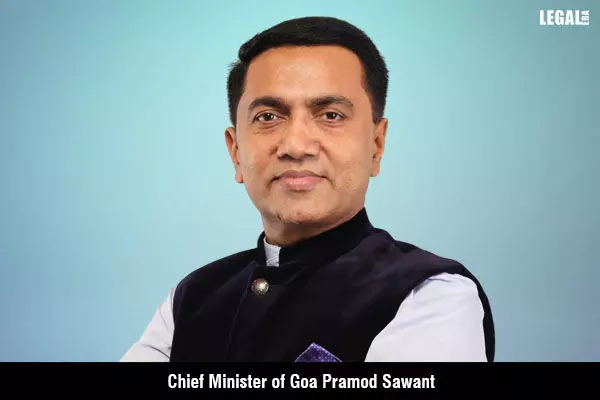
It will take care of their safety and labour rights
Concerned about the large influx of temporary workers in the State, Goa’s Chief Minister, Pramod Sawant, is initiating a policy to regulate the employment system through rapid service delivery platforms.
The Chief Minister assured the legislative assembly that the guidelines would be introduced within six months.
During a calling attention motion by the opposition, Sawant stated, “Everyone has raised concerns. There is a law-and-order issue and health concerns. There is the transport department. We will find out the number of workers and after a proper study, a policy will be formulated.”
While agreeing with legislators, he said that the arrival of gig workers and delivery partners from other states needed careful monitoring by multiple departments, including labour and employment, transport, home, food and drugs administration, and police.
Sawant added, "Registration to get them on board will be made compulsory along with verification.”
Earlier, Leader of the Opposition, Yuri Alemao, expressed concern about the health and safety of workers, who often work for unregulated hours.
Alemao remarked, "Economic opportunities aside, there are legitimate concerns about labour practices and marginalisation of locals. Most gig workers are outsiders with vehicles registered outside the State. Compliance is a major concern.”
He further questioned, “What are the minimum wages, working hours, and other transport compliances? Are they verified by the police?”
Responding to the query, Labour Minister Atanasio Monserrate informed that gig workers were not covered under labour legislation, as they worked on a commission basis.
Adding that the department registered 862 gig workers, he maintained. "There is no provision to reserve gigs or any other vacancies only for Goans. The Central Government is seized of this matter all over India, and in future, some regulations may come up for such workers through the Centre.”