


CCI orders enquiry into Indigo over flight cancellation, fare hike in December 2025
CCI orders enquiry into Indigo over flight cancellation, fare hike in December 2025
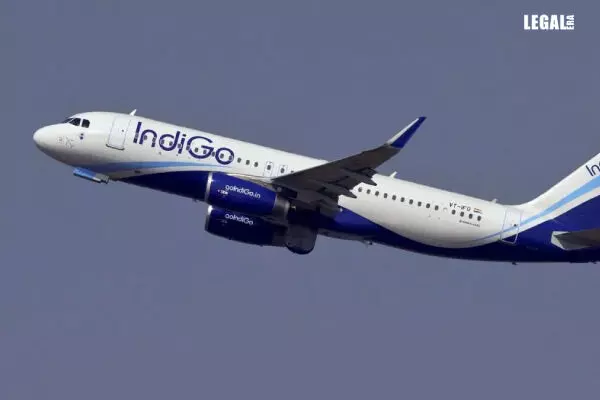
The Competition Commission of India (CCI) has directed an investigation into whether India’s largest airline, Indigo, abused its dominant position by cancelling flights, restricting capacity and charging higher fares in the aftermath of the December 2025 disruption.
During the first week of December 2025, when IndiGo’s massive network unraveled that its thousands of passengers were stranded and overnight, the airfares soared, and the incident was considered another operational breakdown in a stretched aviation sector.
However, after a complaint by Kartikeya Rawal, a legal director at food delivery platform Swiggy, over last-minute cancellations and steep fare hikes, the CCI set out to examine whether Indigo abused its dominant position during the last month of 2025. It prompted the competition regulator to scrutinize whether the disruption was intentional.
Thus, in an order passed in Case No. 44 of 2025, the Commission has directed a probe into whether India’s largest airline abused its dominant position by cancelling flights, restricting capacity and charging higher fares, causing passenger inconvenience.
Even though the order came after lawyer Rawal’s complaint, it also concerns the wider market impact the Indigo move had during the flight cancellations.
The Swiggy legal director held that he had booked a return journey on the Delhi–Goa–Bengaluru sector for 5 December 2025, by paying Rs.7,173.
However, a few hours before the departure, IndiGo cancelled his flights without offering any alternative means for him to travel.
The lawyer alleged that the airline’s conduct was not just about causing inconvenience to thousands of passengers, but also that IndiGo had cancelled flights in bulk. This created artificial scarcity in the aviation sector.
As a result, numerous passengers were forced to accept much higher prices due to limited alternatives available to them. Rawal submitted that Indigo’s manipulation amounted to abuse of dominance under the Competition Act, particularly because of unfair pricing and restriction of services.
Meanwhile, IndiGo challenged Rawal’s contention on the maintainability of the case and the jurisdiction of the CCU in the matter.
The airline contended that the aviation sector was governed by a specialized regulatory framework under the Bhartiya Vayuyan Adhiniyam, 2024, and the Aircraft Rules, 1937. It added that the issues relating to operations and fares fell within the domain of the Directorate General of Civil Aviation (DGCA).
Indigo argued that the DGCA monitored tariffs and market behavior and that the CCI was not supposed to intervene in matters covered by sectoral regulations.
Furthermore, IndiGo maintained that the disruptions during December were caused by operational constraints, including aircraft availability and supply chain issues. It stressed that the cancellations were not deliberate and never meant to manipulate prices or restrict the supply of aircraft.
On the other hand, the Competition Commission rejected IndiGo’s argument that the CCI lacked jurisdiction in the matter.
It cited the ruling of the Supreme Court in the Bharti Airtel v. CCI case, wherein it was held that sector-specific regulations did not bar the application of competition law. Even as the DGCA oversees safety and operational compliance, it does not conduct economic or market power assessments.
The Commission also mentioned that Rule 135 of the Aircraft Rules, which deals with fare disclosure, was supervisory. It did not address abuse of dominance in any way.
Additionally, the DGCA apprised the CCI that it did not possess the powers to analyze competition-related issues.
Based on the facts, the regulatory body maintained that it was competent to examine the complaint, and it was within its jurisdiction.
While defining the relevant market as domestic air passenger transport services in India, the CCI stated that within the market, it was observed that IndiGo held a dominant position.
The Commission noted that the airline had a market share of 60 to 63 percent in Financial Year 2024 and Financial Year 2025. This was in terms of passengers carried and available seat kilometres. Also, Indigo’s fleet of over 400 aircraft was substantially larger than its competitors and on hundreds of routes, it operates exclusively.
The competition regulator further highlighted the airline’s financial strength and sustained profitability in a sector where many players have struggled. While piecing together the facts, the CCI held that these factors indicated substantial market power by Indigo.
While observing the data relating to the December 2025 disruption of flights by Indigo and the issue of abuse of dominance in the sector, the CCI noted that more than 2,500 flights were cancelled and over 1,800 were delayed in a short span, affecting over three lakh passengers.
The Commission held that the disruption suggested a system-wide impact rather than isolated incidents. It added that the mass cancellations resulted in the withdrawal of capacity from the market at a time of high demand.
And because IndiGo held a dominant position, it limited the availability of alternatives for passengers. The CCI also noted that consumers were effectively ‘locked in’ and compelled to book expensive tickets due to the lack of viable substitutes, which showed that it took them for a ride.
The regulatory body stated that on a prima facie basis, the conduct of the airline appeared to fall within Section 4(2)(a)(i) of the Competition Act and related to unfair prices, and Section 4(2)(b)(i), relating to restriction of services.
However, the CCI clarified that the findings were preliminary and further investigation was possible.
The regulator has thus ordered an investigation under Section 26(1) of the Competition Act, based on its initial assessment.
It has given directions to the DGCA to further examine the matter and submit a report within 90 days. The probe will focus on the reasons for the cancellations, capacity management, pricing patterns and internal decision-making by Indigo.
The CCI also emphasized that its order did not mean that it had found the airline guilty of misconduct. It added that Indigo will be given the opportunity to respond to the investigation report before any further action is taken over the issue.
As the matter stands and depending on the outcome, the case could either be closed or proceed to detailed hearings, potentially leading to penalties or behavioral directions. But as of now, it is set for preliminary scrutiny to formal investigation, placing the December 2025 disruption of flights by Indigo under regulatory probe.



