
- Home
- News
- Articles+
- Aerospace
- Artificial Intelligence
- Agriculture
- Alternate Dispute Resolution
- Arbitration & Mediation
- Banking and Finance
- Bankruptcy
- Book Review
- Bribery & Corruption
- Commercial Litigation
- Competition Law
- Conference Reports
- Consumer Products
- Contract
- Corporate Governance
- Corporate Law
- Covid-19
- Cryptocurrency
- Cybersecurity
- Data Protection
- Defence
- Digital Economy
- E-commerce
- Employment Law
- Energy and Natural Resources
- Entertainment and Sports Law
- Environmental Law
- Environmental, Social, and Governance
- Foreign Direct Investment
- Food and Beverage
- Gaming
- Health Care
- IBC Diaries
- In Focus
- Inclusion & Diversity
- Insurance Law
- Intellectual Property
- International Law
- IP & Tech Era
- Know the Law
- Labour Laws
- Law & Policy and Regulation
- Litigation
- Litigation Funding
- Manufacturing
- Mergers & Acquisitions
- NFTs
- Privacy
- Private Equity
- Project Finance
- Real Estate
- Risk and Compliance
- Student Corner
- Take On Board
- Tax
- Technology Media and Telecom
- Tributes
- Viewpoint
- Zoom In
- Law Firms
- In-House
- Rankings
- E-Magazine
- Legal Era TV
- Events
- Middle East
- Africa
- News
- Articles
- Aerospace
- Artificial Intelligence
- Agriculture
- Alternate Dispute Resolution
- Arbitration & Mediation
- Banking and Finance
- Bankruptcy
- Book Review
- Bribery & Corruption
- Commercial Litigation
- Competition Law
- Conference Reports
- Consumer Products
- Contract
- Corporate Governance
- Corporate Law
- Covid-19
- Cryptocurrency
- Cybersecurity
- Data Protection
- Defence
- Digital Economy
- E-commerce
- Employment Law
- Energy and Natural Resources
- Entertainment and Sports Law
- Environmental Law
- Environmental, Social, and Governance
- Foreign Direct Investment
- Food and Beverage
- Gaming
- Health Care
- IBC Diaries
- In Focus
- Inclusion & Diversity
- Insurance Law
- Intellectual Property
- International Law
- IP & Tech Era
- Know the Law
- Labour Laws
- Law & Policy and Regulation
- Litigation
- Litigation Funding
- Manufacturing
- Mergers & Acquisitions
- NFTs
- Privacy
- Private Equity
- Project Finance
- Real Estate
- Risk and Compliance
- Student Corner
- Take On Board
- Tax
- Technology Media and Telecom
- Tributes
- Viewpoint
- Zoom In
- Law Firms
- In-House
- Rankings
- E-Magazine
- Legal Era TV
- Events
- Middle East
- Africa
NSE-BSE impose Rs.10.72 lakh on Coal India for non-compliance with SEBI norms
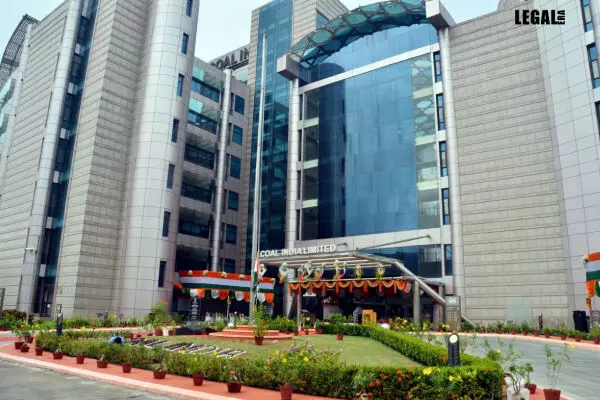
The company stated that the violation was neither due to any negligence nor within the control of its management
In its regulatory filing, government-owned Coal India Limited (CIL) has stated that it has been fined Rs.10.72 lakh for non-compliance with the Securities and Exchange Board of India (SEBI) Listing Obligations and Disclosure Requirements (LODR) norms for appointing a requisite number of independent directors on its board.
It added that the National Stock Exchange (NSE) and the Bombay Stock Exchange (BSE) imposed Rs.5.36 lakh each.
Coal India’s statement read, "The company is in receipt of a notice from the NSE and the BSE, regarding non-compliance with the provisions of Regulation 17 of the SEBI LODR for the quarter ended 30 June 2025, and fined Rs.5,36,900 each.”
Non-compliance with Regulation 17 concerns violations of corporate governance rules, such as improper board composition, e.g., lack of independent directors or failure to pass a special resolution for a non-executive director aged 75 plus, or inadequate board meeting practices (failing to meet a minimum of four times a year).
However, the company maintained that the non-compliance was neither due to any negligence nor within the control of its management. It also made efforts to meet the requirements.
Since the appointment of all board members is done by the President of India, it was outside the purview of the company’s management.
Coal India, which currently has six independent directors on its board, said, "We requested BSE and NSE to waive the penalty. The past requests were considered favourably by the exchanges.”
The company accounts for over 80 percent of domestic coal production. It reported a six percent drop in production at 229.8 million tonnes (MT) in the April-July period of the current financial year, even as the government is making efforts to increase the output to tackle imports.
In the corresponding period of the previous fiscal, it produced 244.3 MT of coal.



