
- Home
- News
- Articles+
- Aerospace
- Artificial Intelligence
- Agriculture
- Alternate Dispute Resolution
- Arbitration & Mediation
- Banking and Finance
- Bankruptcy
- Book Review
- Bribery & Corruption
- Commercial Litigation
- Competition Law
- Conference Reports
- Consumer Products
- Contract
- Corporate Governance
- Corporate Law
- Covid-19
- Cryptocurrency
- Cybersecurity
- Data Protection
- Defence
- Digital Economy
- E-commerce
- Employment Law
- Energy and Natural Resources
- Entertainment and Sports Law
- Environmental Law
- Environmental, Social, and Governance
- Foreign Direct Investment
- Food and Beverage
- Gaming
- Health Care
- IBC Diaries
- In Focus
- Inclusion & Diversity
- Insurance Law
- Intellectual Property
- International Law
- IP & Tech Era
- Know the Law
- Labour Laws
- Law & Policy and Regulation
- Litigation
- Litigation Funding
- Manufacturing
- Mergers & Acquisitions
- NFTs
- Privacy
- Private Equity
- Project Finance
- Real Estate
- Risk and Compliance
- Student Corner
- Take On Board
- Tax
- Technology Media and Telecom
- Tributes
- Viewpoint
- Zoom In
- Law Firms
- In-House
- Rankings
- E-Magazine
- Legal Era TV
- Events
- Middle East
- Africa
- News
- Articles
- Aerospace
- Artificial Intelligence
- Agriculture
- Alternate Dispute Resolution
- Arbitration & Mediation
- Banking and Finance
- Bankruptcy
- Book Review
- Bribery & Corruption
- Commercial Litigation
- Competition Law
- Conference Reports
- Consumer Products
- Contract
- Corporate Governance
- Corporate Law
- Covid-19
- Cryptocurrency
- Cybersecurity
- Data Protection
- Defence
- Digital Economy
- E-commerce
- Employment Law
- Energy and Natural Resources
- Entertainment and Sports Law
- Environmental Law
- Environmental, Social, and Governance
- Foreign Direct Investment
- Food and Beverage
- Gaming
- Health Care
- IBC Diaries
- In Focus
- Inclusion & Diversity
- Insurance Law
- Intellectual Property
- International Law
- IP & Tech Era
- Know the Law
- Labour Laws
- Law & Policy and Regulation
- Litigation
- Litigation Funding
- Manufacturing
- Mergers & Acquisitions
- NFTs
- Privacy
- Private Equity
- Project Finance
- Real Estate
- Risk and Compliance
- Student Corner
- Take On Board
- Tax
- Technology Media and Telecom
- Tributes
- Viewpoint
- Zoom In
- Law Firms
- In-House
- Rankings
- E-Magazine
- Legal Era TV
- Events
- Middle East
- Africa
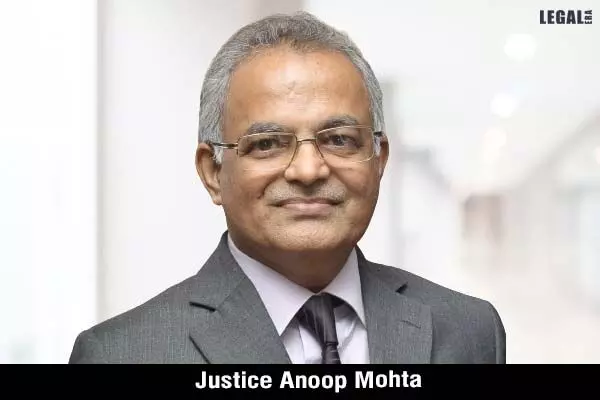


Justice Anoop Mohta passes away
Justice Anoop Mohta passes away Justice Anoop Mohta, Former Judge of the Bombay High Court passed away on 29 January 2023. He was an integral member of the Bombay Bar Association. Born on 4th December, 1955, Justice Mohta started his practice as an advocate in Nagpur, before moving to Mumbai where was on the panel of senior counsel of the Central government. He was enrolled as an Advocate...
To Read the Full Story, Subscribe to Legal Era News
Access Exclusive Legal Era Stories, Editorial Insights, and Expert Opinion.
Already a subscriber? Sign in Now
Justice Anoop Mohta passes away
Justice Anoop Mohta, Former Judge of the Bombay High Court passed away on 29 January 2023. He was an integral member of the Bombay Bar Association.
Born on 4th December, 1955, Justice Mohta started his practice as an advocate in Nagpur, before moving to Mumbai where was on the panel of senior counsel of the Central government. He was enrolled as an Advocate on 12th February, 1981 and he practised mainly at the High Court of Bombay, in Mumbai on both Original and Appellate Sides and dealt in Constitutional, Civil, Service, Criminal, Customs and Excise, Taxation, Educational, Commercial, Arbitration and Trademarks matters. He has also appeared on behalf of and against, various Public Bodies, Industrial Houses and Companies.
Justice Mohta has also rendered services as Government Pleader and Public Prosecutor for Daman, Diu and Dadra and Nagar Haveli (U.T.) for four years.
Justice Anoop Mohta was elevated as Judge of High Court of Bombay on 14th November, 2003 and he retired on 04 December, 2017.
In 2015, while sitting in a division bench, Justice Mohta dismissed challenges to the Right To Education Act mounted by private schools and upheld the law that required educational institutions to reserve 25 per cent seats for students from economically weak sections at two entry levels — pre-primary and Class 1. The bench headed by Justice Mohta ruled, "Right to free and compulsory education is a concept, apart from the constitutional provision, that is the foundation of the RTE. This is an important right in favour of children."


